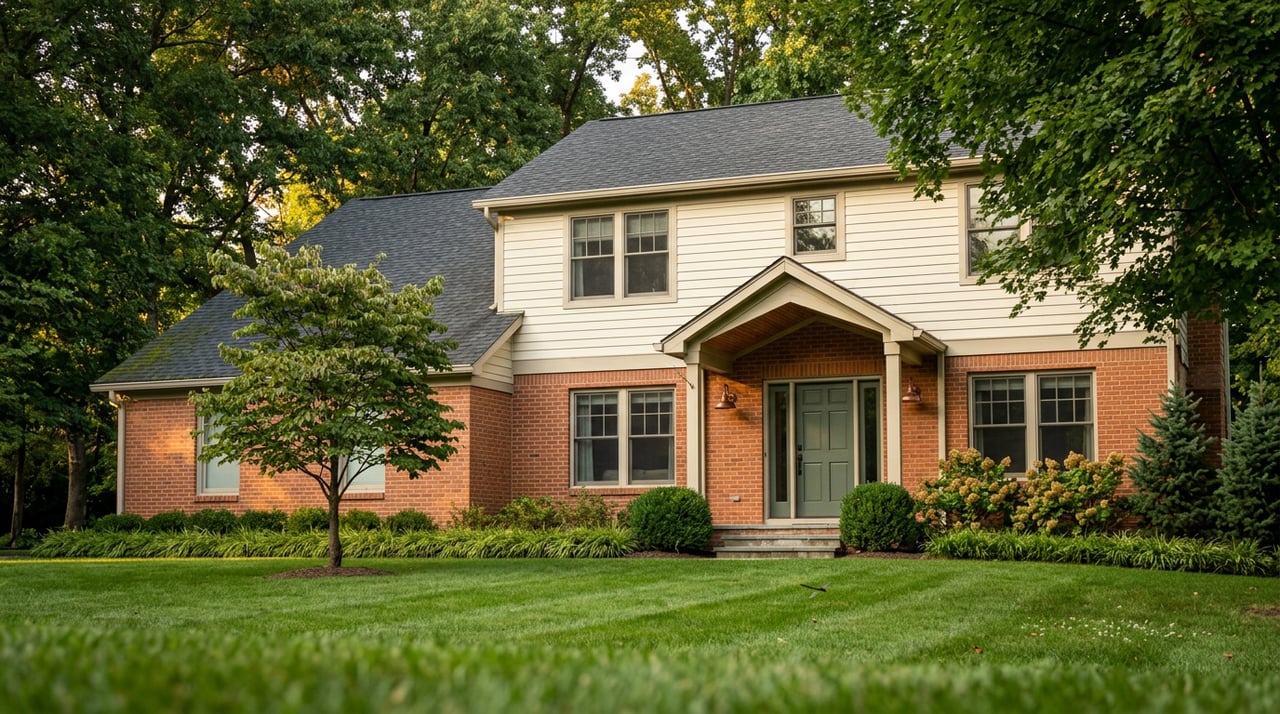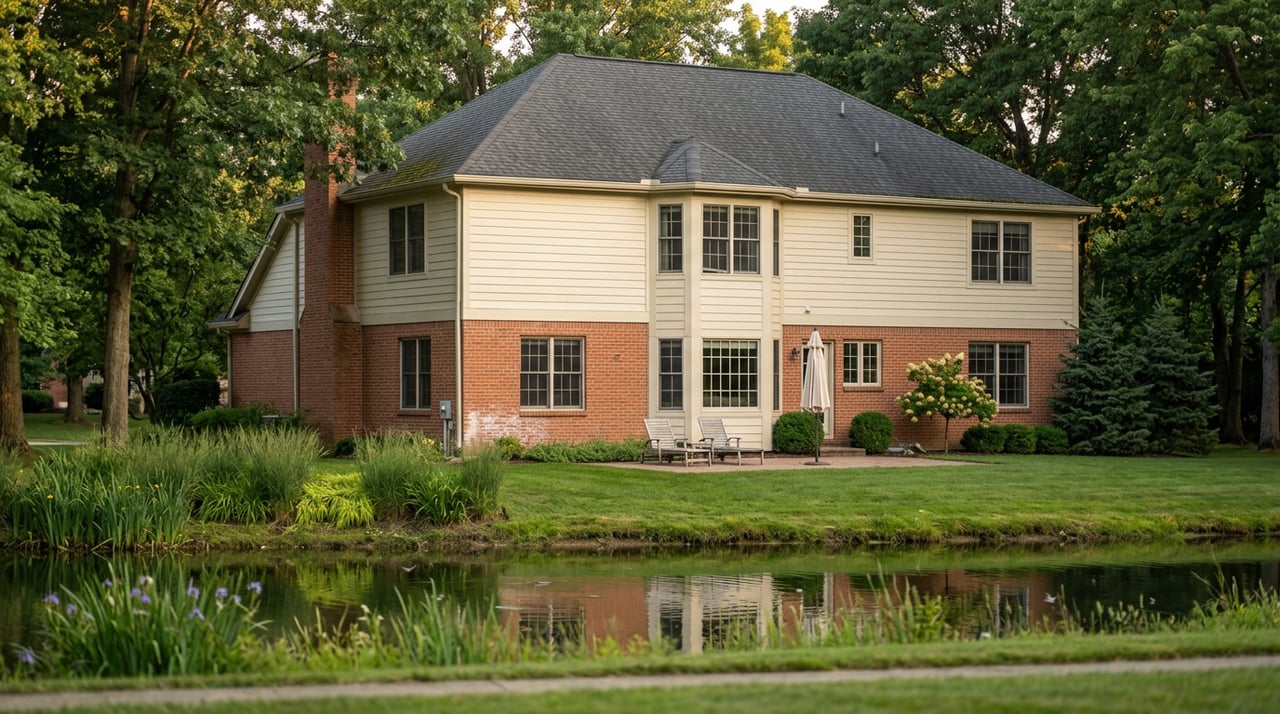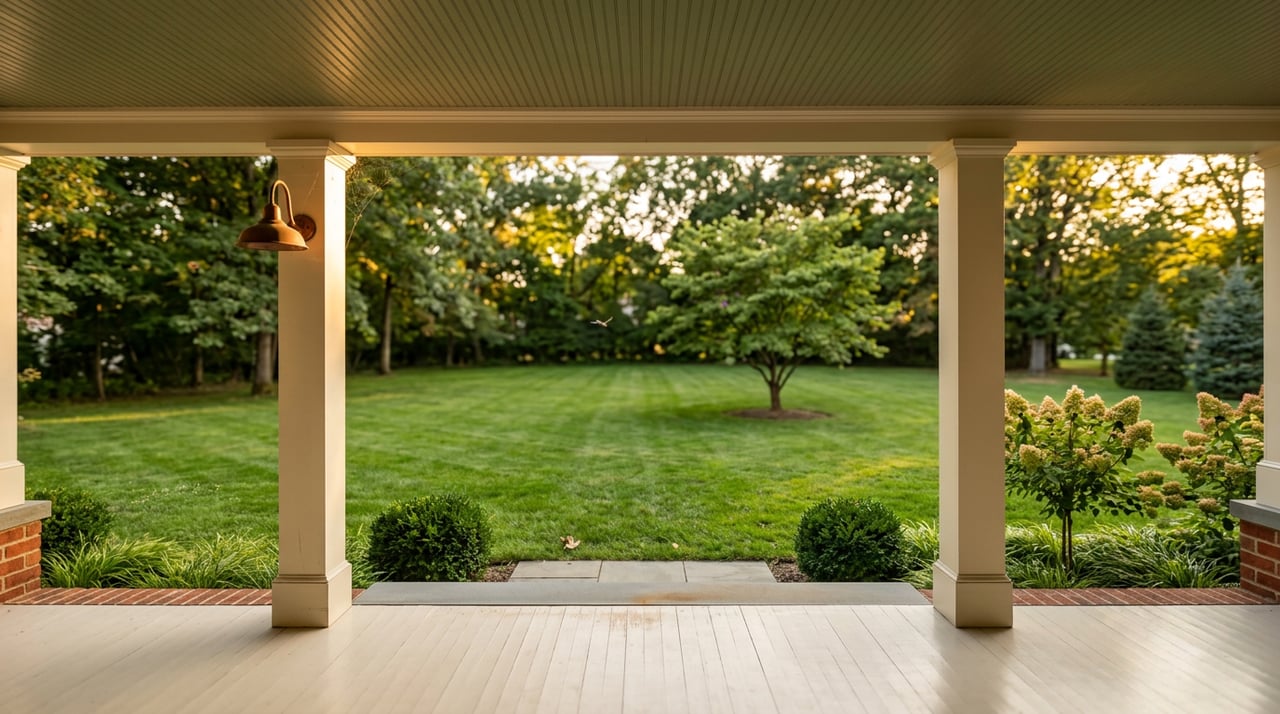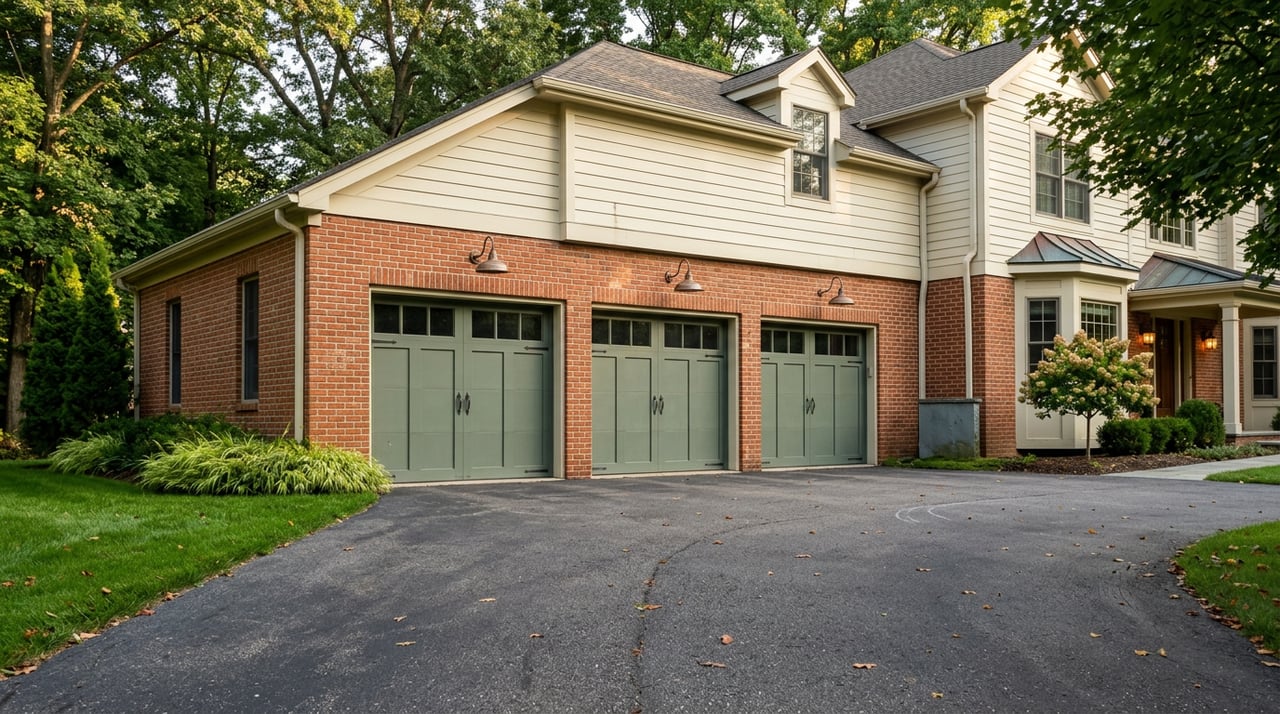
Pull up the Yorkville market summary and you will see a median list price of roughly $417,000 as of May 2026. Then pull the three homes currently active inside Fields of Farm Colony and the range sits between $639,900 and $714,900, averaging about $676,600. That gap is not a rounding error, and it is not simply about square footage. It is a premium the market pays for an acre of private ground and the two mechanical systems that serve it, and those same two systems are what the buyer's lender will look at hardest before your close.
If you are preparing to list here, the transaction you are about to run looks almost nothing like a resale inside city limits.
The premium you are actually selling
Fields of Farm Colony sits east of Route 71 and south of Von Emmon, in unincorporated Oswego Township rather than inside the City of Yorkville. Public MLS records for the subdivision consistently show one-acre-plus lots, private well and private septic, and homes built in the mid-2000s in the 2,400 to 4,800 square foot range, with select lots carrying water frontage and water rights along the pond and creek edge.
A buyer paying in the mid-$600s to low-$700s here is not paying for a bigger version of a Yorkville subdivision home. They are paying for four distinct things stacked on top of each other:
- Roughly an acre of usable ground, professionally landscaped in most cases
- A custom or semi-custom floor plan rather than a production build
- Township-level rules and no municipal utility bill
- On the interior lots along the water, a view and, on some parcels, deeded water rights
Every one of those four things is also a due-diligence item. That is the hinge of this post.
Why the buyer's loan type decides your timeline
Most Fields of Farm Colony sellers assume their buyer's financing is the buyer's problem. In an unincorporated, well-and-septic subdivision, it is your problem too, because the loan product dictates which inspections must happen before you can close.
Here is the practical breakdown from published lender guidance and Fannie Mae's environmental hazards framework:
- Conventional (Fannie Mae or Freddie Mac): Typically no mandatory well or septic inspection. The lender still has to disclose any environmental hazard flagged by the appraiser, broker, seller, or buyer, and once flagged, an inspection is required. In practice, an alert appraiser noting "private well and septic" in the report is enough to trigger it.
- FHA: Well and septic inspections are always required, regardless of visible condition. FHA also enforces setback rules, including a septic tank at least 50 feet from the water supply on existing construction, and a well flow of three to five gallons per minute for existing homes.
- VA: Same posture as FHA. Inspections are required, and the loan cannot close until any deficiencies are remediated.
- Cash: The buyer chooses, but a well-advised cash buyer will still order both.
The reason to know this before you sign a listing agreement: if your buyer arrives with an FHA or VA pre-approval and your septic tank has not been pumped or located in years, the closing calendar is now controlled by an inspector, a possible remediation contractor, and the Kendall County Health Department, not by you.
The seller who assembles the well and septic paperwork before listing controls the closing. The seller who waits hands that control to the buyer's lender.
What Kendall County actually holds on your property
The Kendall County Health Department, through its Environmental Health Services division, is the local authority for onsite wastewater treatment systems in the unsewered parts of the county, which includes Fields of Farm Colony. They issue installation and repair permits, conduct inspections, and hold the record file for your specific system.
That file usually contains the original permit, the "as-built" drawing showing tank and lateral field locations, and any subsequent service, repair, or complaint history. If your home was built in the mid-2000s, that paperwork exists. Requesting it before you list gives you three concrete advantages:
- You can hand the buyer's inspector a location map, which shortens the site visit and reduces the number of speculative findings.
- You learn the system type on record. Conventional gravity systems, aerobic treatment units (ATUs), and mound systems have different maintenance profiles. An ATU, for example, requires evaluation and maintenance at least every six months under IDPH rules, and a missing record here is a common surprise.
- You confirm setback compliance under 77 Ill. Adm. Code Part 905, which mandates 50 feet from a potable well, 10 feet from a property line, and 25 feet from a drainage ditch. If a shed, pool, or addition has drifted into those setbacks over twenty years, you would rather learn during listing prep than during attorney review.
Illinois does not mandate a statewide septic inspection at point of sale, but 26 counties have adopted local ordinances requiring inspection or pumping at transfer. Kendall is not on that list as of this writing, which means the pressure to inspect comes from the lender and the buyer's attorney, not the county. That is a meaningful distinction, because it means a well-prepared seller can set the terms of the inspection rather than react to a county deadline.
The pre-list sequence that protects your price
The active list range in Fields of Farm Colony is thin. With three homes on the market and 124 sold since the subdivision was built, according to public MLS-derived counts, each active listing is essentially its own comp. That means a re-negotiation after inspection does not just reduce your net; it becomes part of the visible comp set for the next seller down the street.
A defensible pre-list sequence looks like this:
- Pull your Health Department file. Request the septic permit and any service history from the Kendall County Health Department. Confirm system type, tank size, and lateral field location.
- Pump the septic tank. Standard maintenance interval is every three to five years. If you cannot document the last pump, do it now. Keep the receipt.
- Order a private well water test. Coliform bacteria and nitrate/nitrite at minimum. FHA and VA buyers will require testing anyway; conventional buyers increasingly ask.
- Locate and mark the well head and septic components. An inspector who can walk directly to the components writes a shorter, cleaner report than one who has to hunt.
- Confirm HOA standing. The Fields of Farm Colony HOA operates from PO Box 601, Yorkville, and holds architectural and use rules that will surface in the buyer's attorney review. A paid-up assessment letter and any approvals for fences, sheds, and outbuildings should be in your file.
- Address staging with acreage in mind. Buyers at this price point are evaluating the outdoor room as much as the interior. Sightlines from the patio, the condition of tree canopy, and the definition of planting beds carry weight that they would not in a quarter-acre subdivision.
Each of these steps is inexpensive relative to a post-inspection credit. A single failed septic component can quickly exceed the $10,000 figure the University of Illinois Extension cites as a replacement benchmark, and once that number is in the buyer's hands, the negotiation has moved from price to condition.
Pricing against a thin comp set
Illinois as a whole sold at a 99.3% sale-to-list ratio in May 2026, with 36.1% of homes closing above list price and a state median around $333,814, according to Redfin's aggregated MLS data. Illinois REALTORS reported 12,555 statewide closings in that same month.
Those are useful anchors, but the pricing question inside Fields of Farm Colony sits above them, not on them. Recent sold data pulled from the subdivision shows single-family closings clustered between roughly $605,000 and $770,000, with square footage ranging from about 2,750 to 4,180. The per-foot spread is wide, and the reason is exactly the four-part premium described earlier. A 3,800-square-foot home on a dry interior lot and a 3,600-square-foot home on the water do not price the same, and pretending they do is how sellers leave money on the table or, more often, chase the market down after 60 days.
The current-market answer is not a formula. It is a comp read that isolates lot position, water frontage, floor plan, and updates as separate line items and prices each one against the last three subdivision sales rather than against the citywide median.
A few questions sellers ask first
Do I have to disclose problems with the well or septic even if they never triggered a repair? Illinois residential disclosure law requires the seller to certify knowledge of any material defects, and that includes water and waste systems. A general "no known issues" certification is not a substitute for an inspection, and a professional inspection report reduces both liability and negotiation friction.
Will an FHA or VA buyer really slow my close? Not necessarily slow it, but they will structure it. Inspections are required, remediation must clear before funding, and the appraiser is looking at septic setbacks and well flow rate as part of the report. A seller who has already tested the well and pumped the tank often closes an FHA or VA deal on the same calendar as a conventional one.
Is being unincorporated a disadvantage at resale? It changes the buyer profile more than the price. Township taxes, private utilities, and larger lots attract buyers who want that trade-off. The premium on your active list price is evidence that the market is paying for it, not discounting it.
When you want a second read on the price
Fields of Farm Colony rewards sellers who prepare the file before they prepare the house. The staging, the photography, and the marketing all matter, and they matter more when the paperwork behind them is already clean. That is the part of a listing that a buyer's inspector, appraiser, and lender never see on the MLS, and it is the part that decides whether your close lands on the calendar you wanted.
If you are thinking about a move this year and want a comp read that separates lot position from finish level, or a pre-list plan that puts the well and septic file in order before a sign goes in the yard, The Bakka Team is glad to sit down with you. Let's Connect.